Doctoral seminar
Talks offered by Elisa Bonacini and Davide Picca
-
Date: 20 MARCH 2026 from 15:00 to 18:00
-
Event location: Pasoli Room, via Zamboni 32, Bologna
-
Type: Other events
Programme:
LINK to join the seminar (CHeDE Teams room)

- 3.00-4.30 p.m. Elisa Bonacini (digital museum expert, archaeologist and digital museologist, University of Bari), How to make a digital story tellable
Elisa Bonacini is a researcher at the University of Bari Aldo Moro, where she works on museology, art criticism and cultural heritage promotion, with a particular focus on digital technologies. An archaeologist by training, she holds two PhDs and has developed an interdisciplinary profile that integrates archaeology, communication, digital storytelling and e-learning. For years, she has been working on the digital transformation of museums and cultural sites, collaborating with national and international institutions, public bodies, universities and creative companies. She has participated in research and consulting projects on virtual museums, augmented reality, accessibility and heritage narration, and is actively involved in training and dissemination on issues of digital culture applied to cultural heritage.
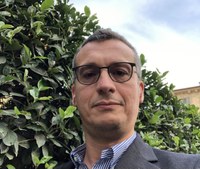
- 4.30-6 p.m. Davide Picca (expert in Digital Humanities and Natural Language Processing and Artificial Intelligence applied to the Humanities, University of Lausanne), Artificial Semiosis: How AI materialises the sign and illuminates Peirce's logic
Davide Picca lectures at the University of Lausanne. His education combines philosophy, cognitive psychology and computer science, and he has been working for years on the dialogue between the humanities and artificial intelligence. He has conducted research and taught at various international institutions, including Columbia University in New York, the Université Sorbonne Nouvelle in Paris and Microsoft's European centre in Dublin. His interests focus in particular on how machines represent language and knowledge, with a constant focus on the cultural and cognitive aspects of artificial intelligence. He is the author of numerous scientific papers on these topics. Together with Alberto Romele, he wrote ChatGPT e le intelligenze artificiali: una biografia intellettuale (Fandango, 2025), an essay that explores the meaning and misunderstandings of generative AI in our contemporary imagination.